

Introduction
On June 16, 2025, during Neurodiversity Pride Day in Leiden, Delft, and Amstelveen, choreographer Sietske Stienstra and her company De Discourse Dance presented a moving performance that portrayed the lived experiences of neurodivergent people within a predominantly neurotypical society.
With dancers Sietske Stienstra, Nadine Schuiten, and Demilee W., the audience was guided through inner struggles, moments of strength, and the sense of community so deeply characteristic of neurodiversity. The dance performace will be held one last time on September 25th at 20.00 in “De Nobel”.
What follows is an in-depth exploration of the different sections, themes, and symbolism in this performance.
Part 1: Masks of Conformity versus Authenticity
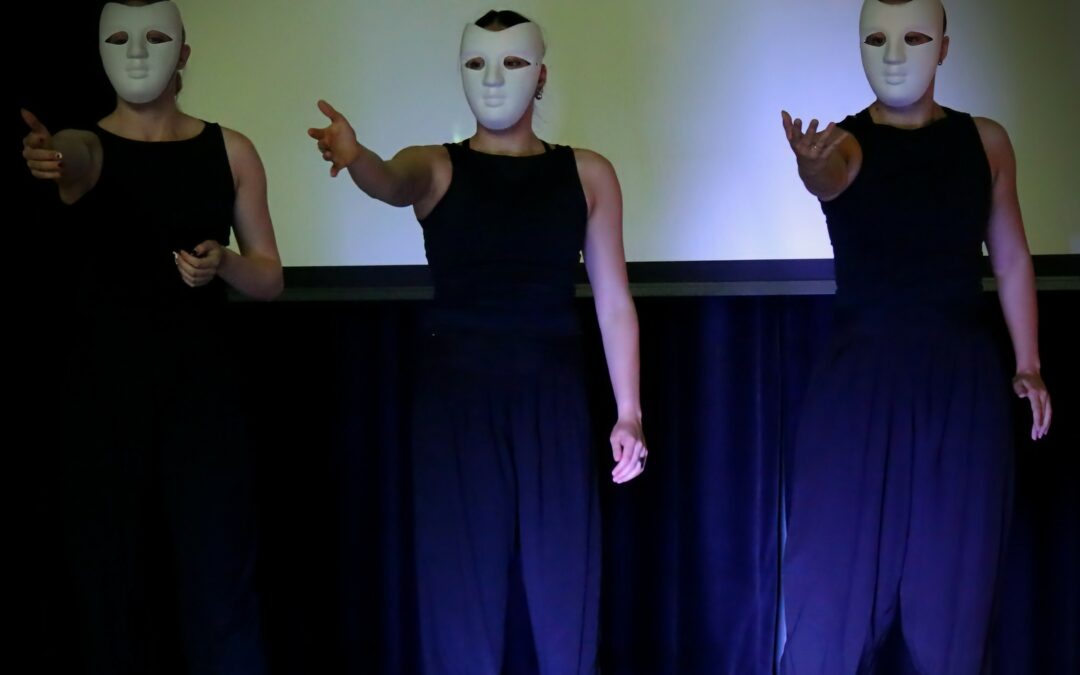
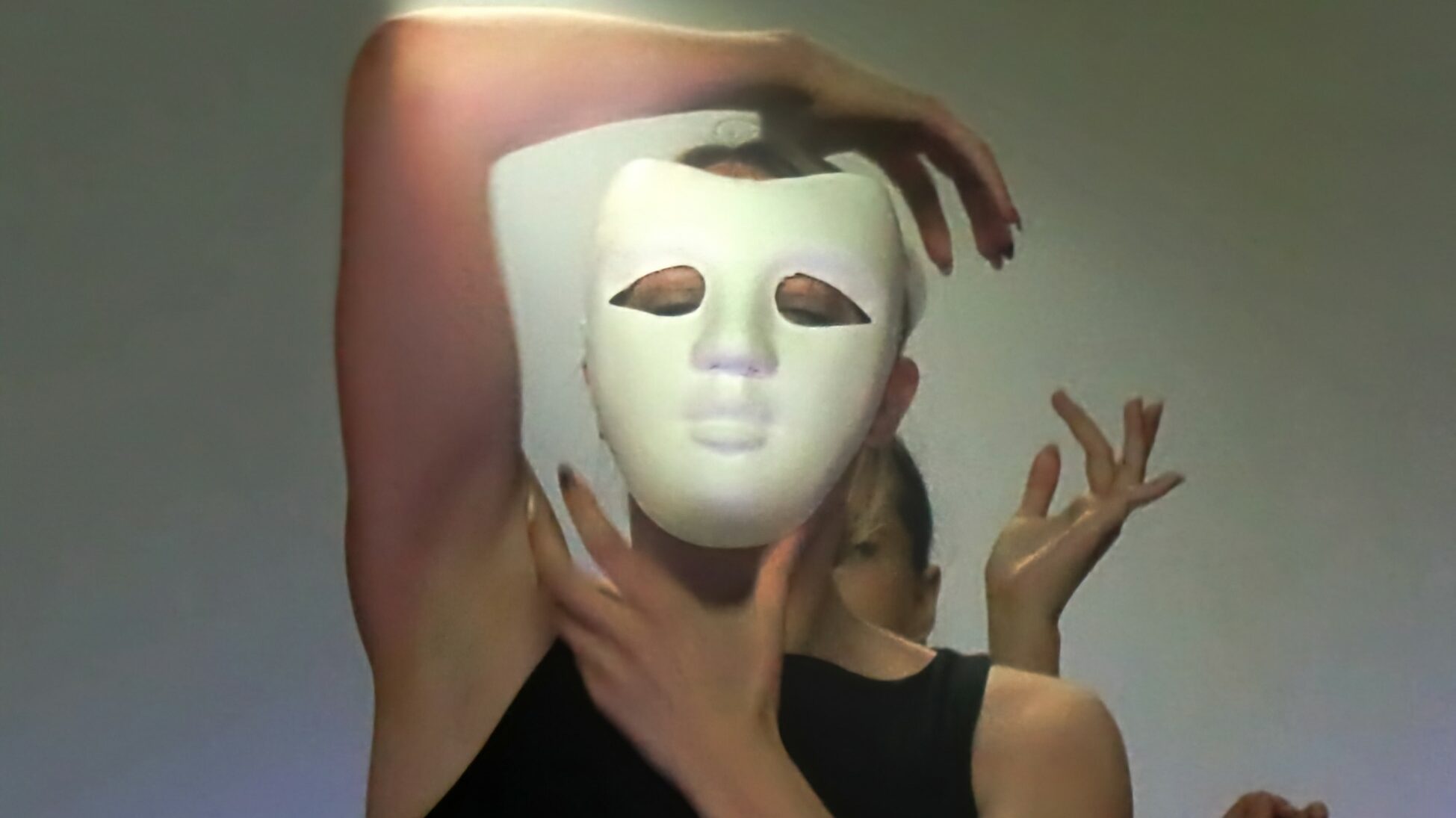
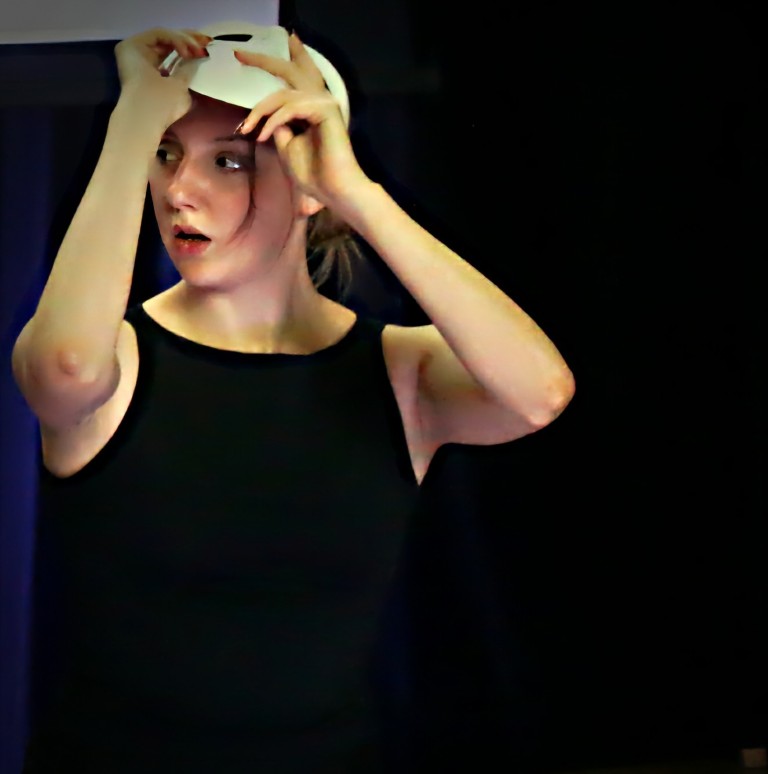
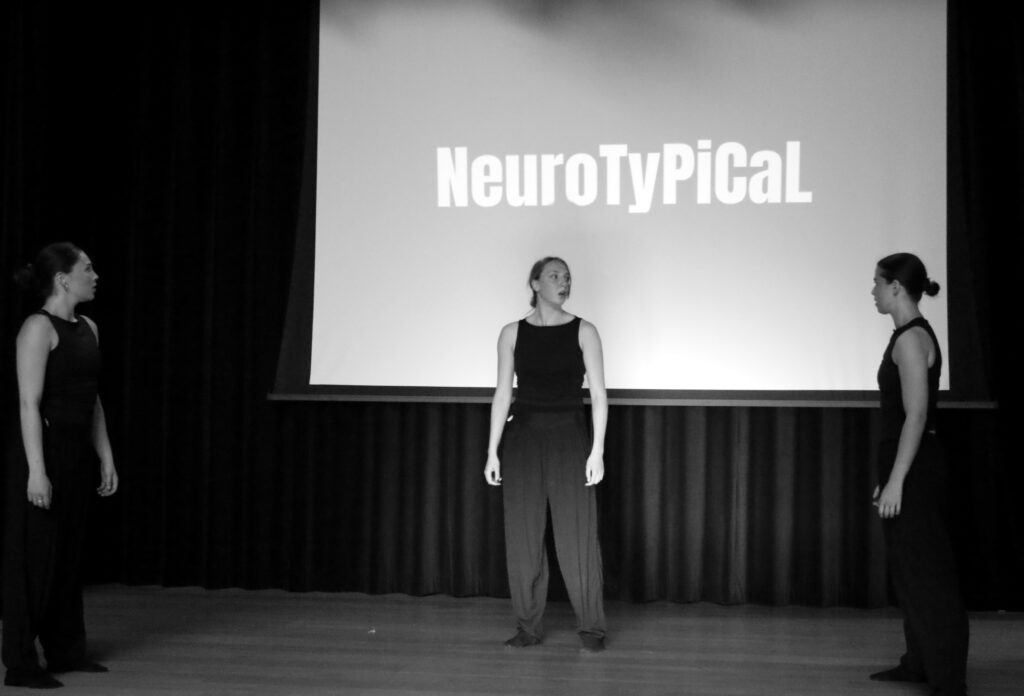
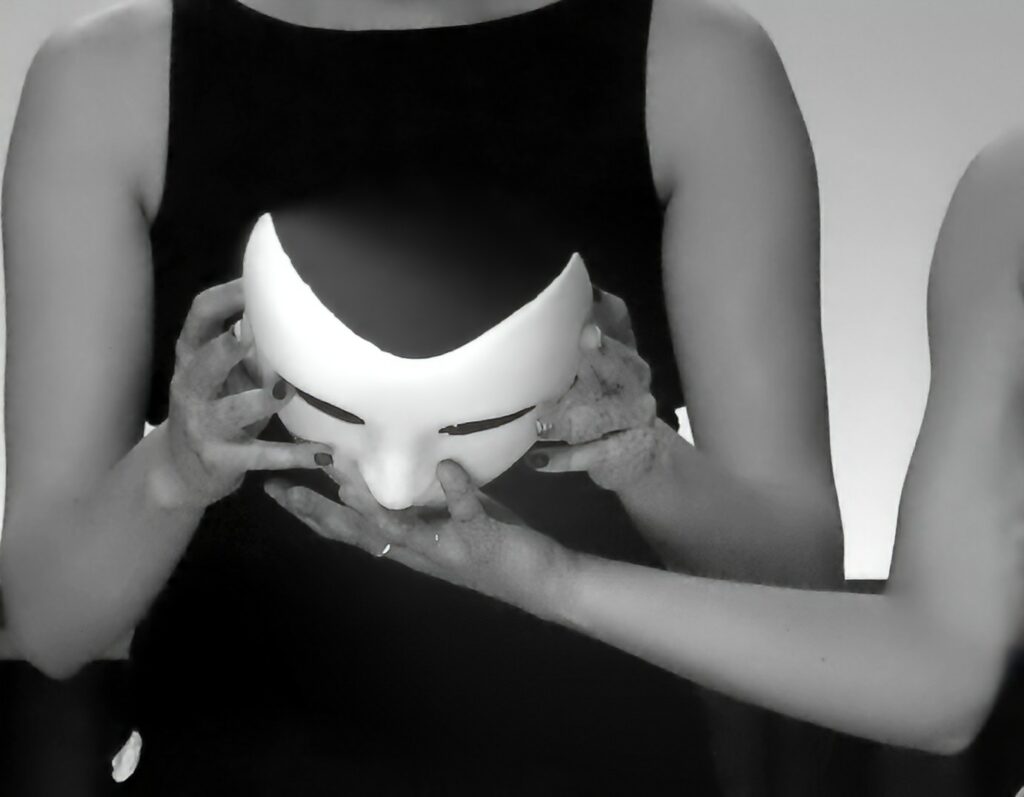
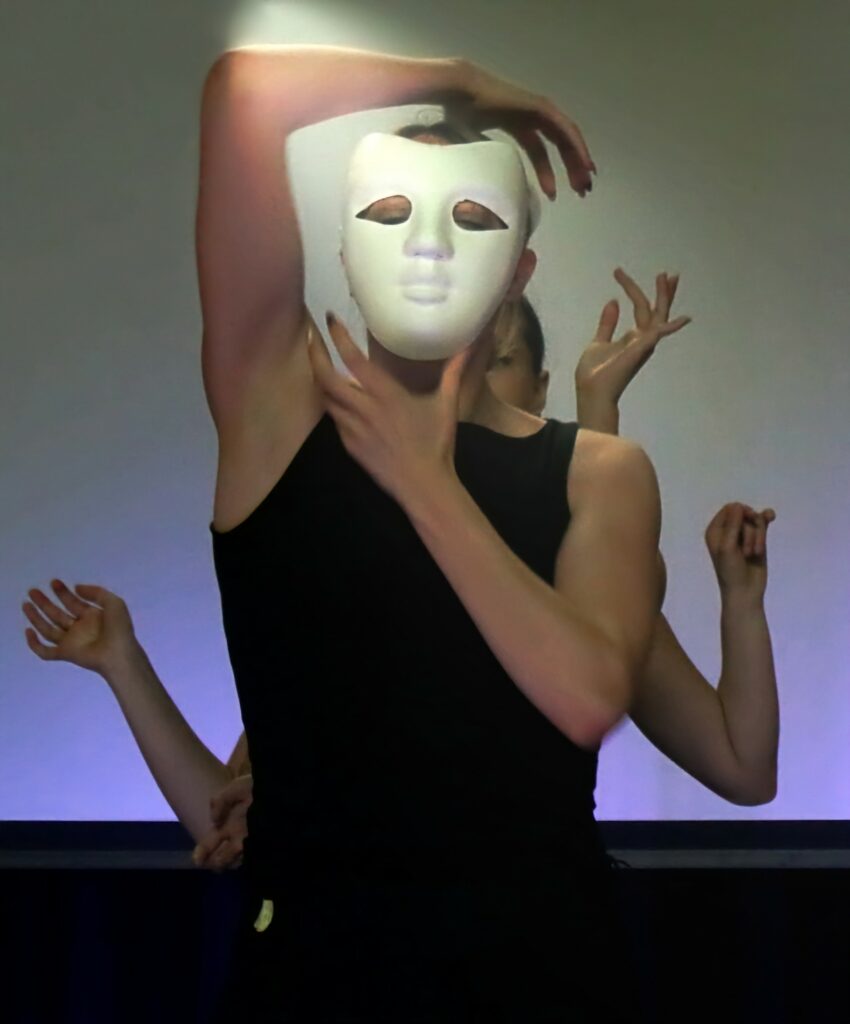
The opening set the tone immediately: three dancers appeared with identical, polished masks, their movements uniform and tightly choreographed. The masks symbolized the social pressure to conform, the expectation to adjust our behavior and expression to neurotypical norms.
As the dancers copied each other’s steps exactly, the stifling weight of sameness became palpable.
The first moment of release came when Sietske Stienstra removed her mask. Her movements instantly became freer, more original. This act was an invitation: “Dare to find your own way of moving.” She reached out to the others, encouraging them to take off their masks, sharing both the fear of being visibly different and the liberation of embracing authenticity.
Part 2: Dyslexia and the Struggle with Language
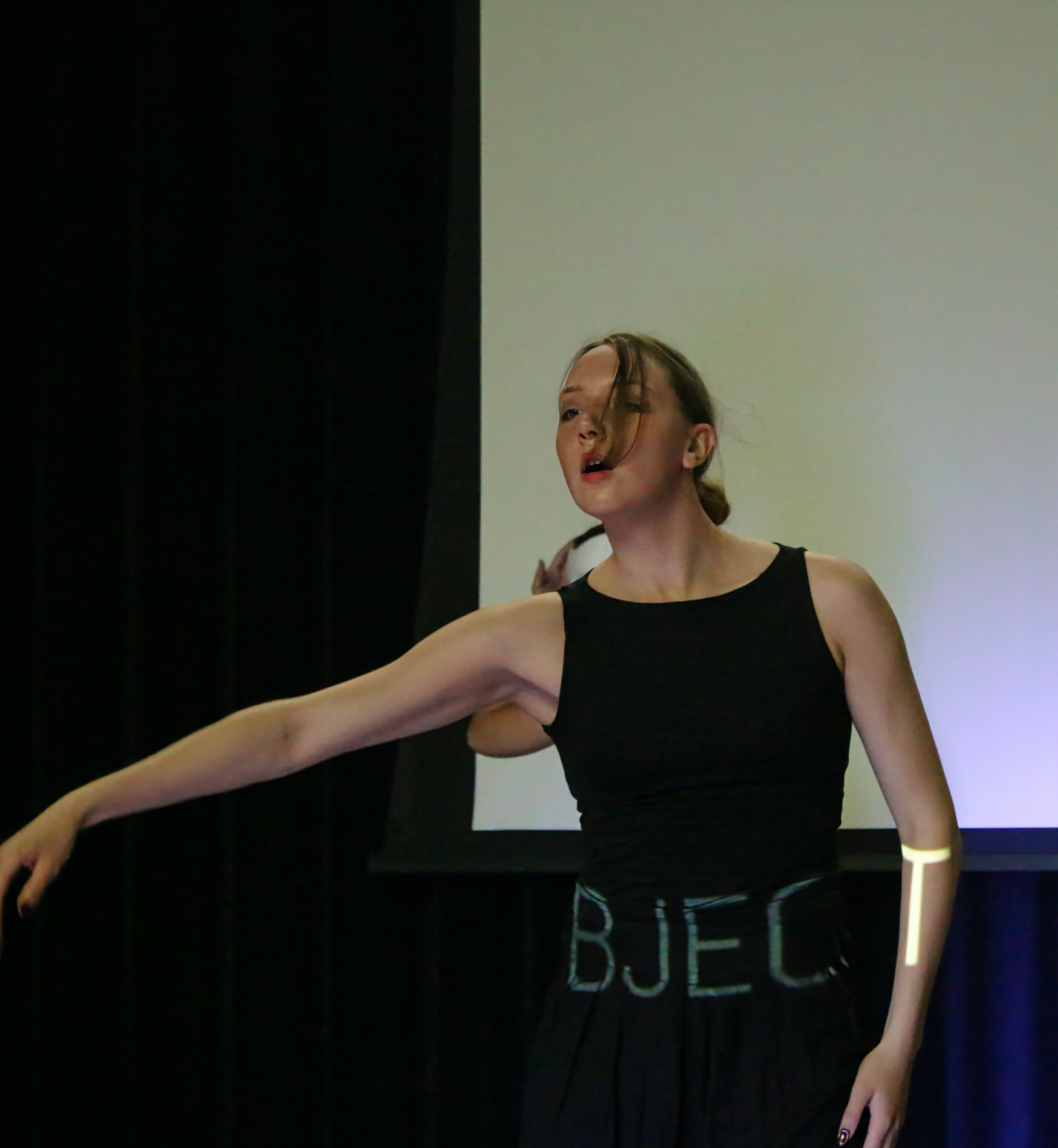
The masks gave way to a backdrop filled with projections of fragmented words. Through halting, uneven movements, the dancers embodied the friction between their creative minds and the rigid demands of standardized language.
The repetitive, unreadable projections seemed to shrink them — as if each word was pointing to their “failure.” And yet, they kept dancing.
The effort remained visible: arms jerked, bodies pushed against the projections, symbolizing life with dyslexia — the ongoing effort, the frustration, but above all the determination to express oneself even when words resist.
Part 3: ADHD – From Wonder to Overload
This part began with one dancer moving with pure wonder. She leapt, spun, and followed the lights with curiosity — every corner of the stage a discovery. It was a joyful expression of ADHD: energy, playfulness, and creativity.
But soon, expectations and external pressures intruded. The playful flow turned chaotic: too many signals, too little clarity.
As other dancers joined, the confusion deepened. The choreography evoked time-blindness: rhythms slipped away, expectations became unclear. The dancers worked hard to keep up, but sudden tempo changes created visible discomfort.
Faces and movements showed the intensifying pressure: deadlines, sensory overload, unspoken rules. No one collapsed, but tension was written into rigid steps, darting eyes, and tightened jaws.
Part 4: Autism – Seeking Structure in a Changing World
A dancer appeared in front of a rectangular shape projected onto the background. This rectangle was not so much a shield, but a recognizable, structured space where the dancer could find calm.
Within the boundaries of the rectangle, her movements were careful, deliberate. Suddenly, the rectangle disappeared. The lighting shifted abruptly, leaving the dancer without her reference point. Unease filled the space.
What followed was a search: she tried to reorient, became distracted, seemed lost. Finally, she closed her eyes, turned inward, and found peace — not in the external environment, but within herself. This marked a turning point: serenity was reclaimed through autistic ways of being, not in spite of them.
Part 5: Unmasking in Connection
The dancers re-entered, wearing their masks once again. What once seemed protective now drained their energy. Visibly exhausted, they lost balance. One dancer finally removed her mask — a moment of relief.
Rather than rejection, this act was met with recognition and support. One by one, others shed their masks too, and a sense of solidarity emerged.
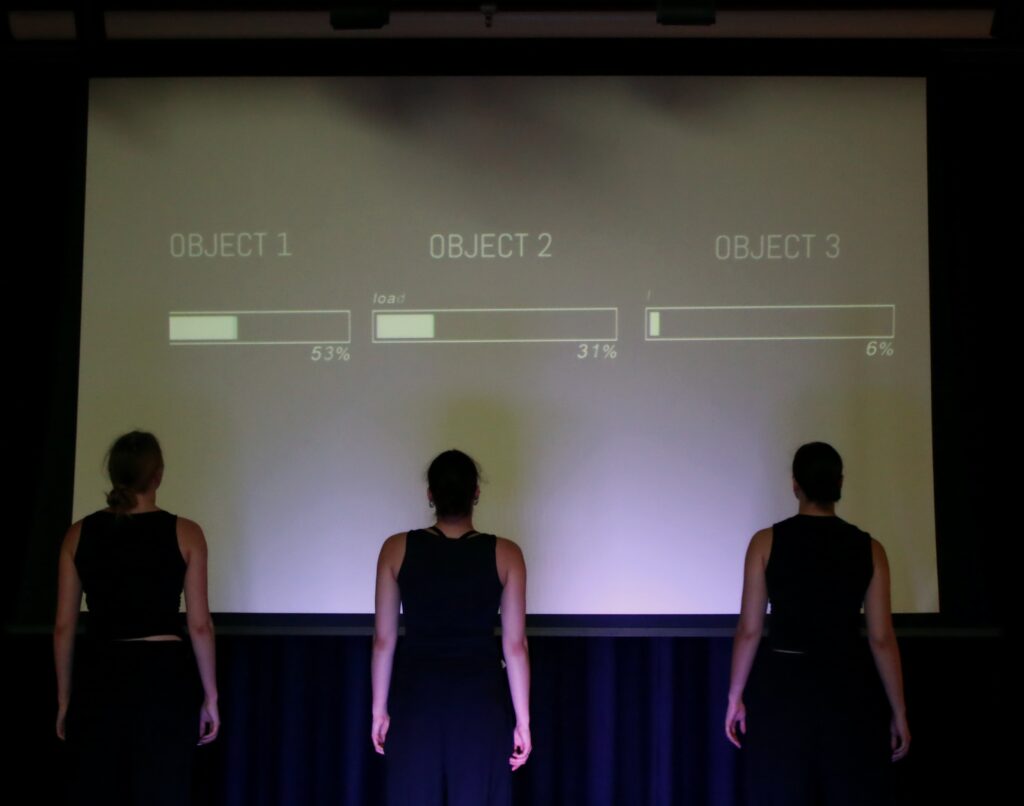
On the screen behind them, a digital progress bar slowly filled from 0% to 100%. The dancers waited, breathing together. When the bar reached 100%, they broke into an exuberant, free dance where each one expressed their own unique style.
They moved without shame, without disguise. They saw each other — not through the lens of societal expectation, but as they truly are. On this stage, there was space for every dance. There was no “right” way to move, only authenticity.
The performance revealed that in a world that pressures you to hide, making yourself visible is an act of revolution.
Conclusion
With Neurodiversity Pride Day 2025, De Discourse Dance, under the direction of Sietske Stienstra, presented a powerful kaleidoscope of movement, emotion, and symbolism.
From suffocating masks to liberating improvisation, from the friction of dyslexia to the joy of ADHD and the serenity of autistic being — each part illuminated a different facet of neurodivergence.
The final scene, where all masks were cast aside and the dancers celebrated together, was a compelling call for recognition, inclusion, and self-love.
This performance not only invited reflection but urged us to celebrate, in daily life, the full spectrum of human minds — without judgment, with open eyes, and with hearts rooted in solidarity.
With our thanks to:
We are grateful for the financial support of Fonds1818 and Oranje Fonds, which have made these performances financially attainable. We also are grateful for the Municipality of Leiden, Upper East in Amstelveen, and Dok in Delft.